Cotton or Linen for a Reusable Wrapping Cloth?
Choose cotton or linen for a reusable wrapping cloth by matching its drape, grip and feel to the object, then troubleshoot common handling problems.
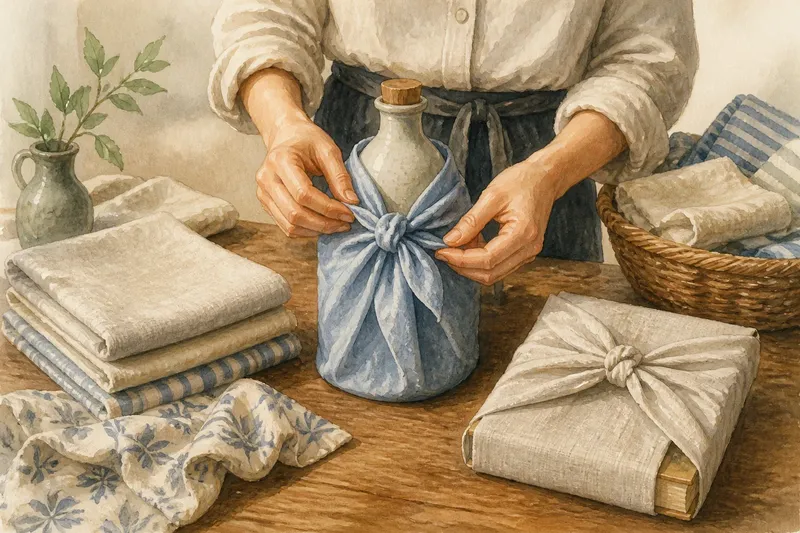
A cotton or linen reusable wrapping cloth behaves differently around a book, a bottle or a soft parcel: cotton tends to mould readily, while linen often holds a crisper fold. If a cloth keeps slipping, bunching or leaving an awkward lump, the cause may be the fabric’s weight and weave rather than your wrapping technique.
Start with the object you want to cover and the way you expect to carry it. A fabric that works well for a square gift may frustrate you around a smooth jar. These common snags can help you decide what to try before buying or cutting another cloth.
Why does the cloth keep slipping?
Smooth surfaces and loose folds make a wrap prone to sliding. A tightly woven, finely finished cotton can be just as slippery as linen, so the fibre name alone will not tell you how much grip the cloth has. Look at the actual surface: a soft, slightly textured weave may hold a fold better than a slick one.
For a smooth-sided object, try a cloth with a little texture and enough body to stay in place. Cotton often feels more yielding in the hands, which can help you draw it snugly around a curved form. Linen’s firmer character can make a clean fold easier to establish, but a very smooth linen may still shift on glass or polished packaging.
Say you are wrapping a smooth ceramic bottle for a short trip. If a crisp linen corner slides loose as you pick it up, try a softer cotton square and pull its opposite corners across the bottle before tying them; the expected result is a closer wrap that is easier to hold. If it still moves, change the fold or choose a less slick surface rather than tightening the knot until the cloth strains.
Why does fabric bunch around corners?
Excess cloth gathers where several folds meet, especially around a rectangular box or a book with sharp edges. A soft, supple cotton may conform readily but also collapse into a thick knot. A stiffer linen can keep its shape, yet resist a compact fold when the cloth is too heavy for the object.
Match the cloth’s weight to the parcel. For a small book, try a light, fine weave that can lie flat; for a broader box, a more substantial cloth may give your hands enough fabric to control. Before wrapping, lay the object in the centre and check that the corners leave room for a tie without creating large, bulky tails.
If the cloth bunches at one corner, open it and reposition the object rather than repeatedly tightening the same fold. Moving the item slightly off-centre can give the short side more fabric to cover its edge. For a book or flat box, folding the cloth around the object in opposing layers usually produces a tidier parcel than drawing every corner into one knot.
Why does the wrap feel too stiff or too floppy?
Feel and drape are related, but they are not the same. A cloth can feel soft against your fingers and still fall loosely around an object; another may feel crisp yet make a stable, angular wrap. Cotton commonly offers a pliable hand, while linen often retains a more defined fold, though weave and finishing can change both impressions.
For rounded or irregular shapes, try a cloth that bends without springing away from the surface. Cotton can be a comfortable choice when you want to gather fabric around a bundle. For square packages and flat objects, linen’s tendency to hold a crease may help the edges look deliberate, provided its weight does not make the parcel cumbersome.
Handle a sample before choosing, if possible. Pinch a corner, fold it over itself, then drape it across the object you plan to wrap. Notice whether it stays where you put it, springs open or piles up in a thick ridge. Those small observations are more useful than choosing by a fibre label alone.
How should you choose cotton or linen for a reusable wrapping cloth?
Use the object and the handling conditions as your guide. A cloth for a book carried in a bag has different demands from one used to present a gift on a table. Consider how often you will tie and untie it, whether the contents have sharp corners, and whether you want a relaxed or sharply folded appearance.
- For soft parcels: Try a flexible cotton that can gather around uneven contents without forcing a rigid crease.
- For books and flat boxes: Look for a light cloth that folds close to the edges without forming a bulky knot.
- For crisp presentation: Consider linen if you want folds that remain visible and structured.
- For smooth objects: Check for surface texture and try a sample wrap, since either fibre can feel slick depending on its weave and finish.
- For frequent tying: Choose a cloth that feels manageable when folded repeatedly; avoid a weight that makes the corners hard to gather.
For everyday use, washability and care matter too. Check the cloth’s care label or the maker’s instructions before washing, particularly if it has a coloured print or decorative finish. If you are repurposing fabric, inspect the edges and seams: a bulky hem can create an uncomfortable knot, while a fraying edge may become more troublesome with repeated handling.
What do readers often ask about wrapping cloth fabric?
Is cotton or linen easier to tie?
Cotton often feels easier to gather because it can be supple in the hand, while linen may make a more defined fold. The easiest choice depends on the cloth’s weight, weave and the shape you are wrapping.
Which fabric is better for a bottle?
Look for enough flexibility to draw the cloth around the curved sides, plus a surface that does not slide too readily. A lightly textured cotton can be a sensible starting point, but try the actual cloth around the bottle before relying on it for carrying.
Will linen make a neater package?
Linen can keep folds looking crisp, which may suit a flat box or book. A heavy or stiff piece can also leave bulky corners, so neatness depends on matching its weight and drape to the parcel.
Can you use a cotton or linen cloth more than once?
Yes, if it remains in suitable condition and you can clean it according to its care instructions. Untie it gently, smooth out the folds and store it flat or loosely folded so it is ready for the next object.
What should you try when neither fabric feels right?
Do not force a choice between cotton and linen if both samples bunch, slide or feel awkward around the object. Compare a different weave or weight within the same fibre, or try a cotton-linen blend if one is available. The construction and finish can matter as much as the fibre content.
Keep a small test square with the object you intend to wrap, then practise the fold you would actually use. That simple pairing makes it easier to judge whether the cloth’s grip, drape and feel suit your routine. For a reusable wrapping cloth, the best material is the one you can handle comfortably and fold back into use without wrestling with it.